
By Tim Farmer, Co-Host of The OSINT Output
The dark web is considered to be a mysterious place full of illegal content, drug marketplaces, and the potential to click on something that will infect your computer. However, this is true of the rest of the internet as well! The only difference is the dark web is an intentionally anonymous, obfuscated portion of the internet.
So, what is the dark web? The dark web is a part of the internet that requires specialized software and encryption to access. It IS A PART OF THE INTERNET, but it requires just a little more than having a device with an operating system on it and a standard browser. The graphic below breaks down each portion of the internet: the surface web, the deep web, and the dark web.
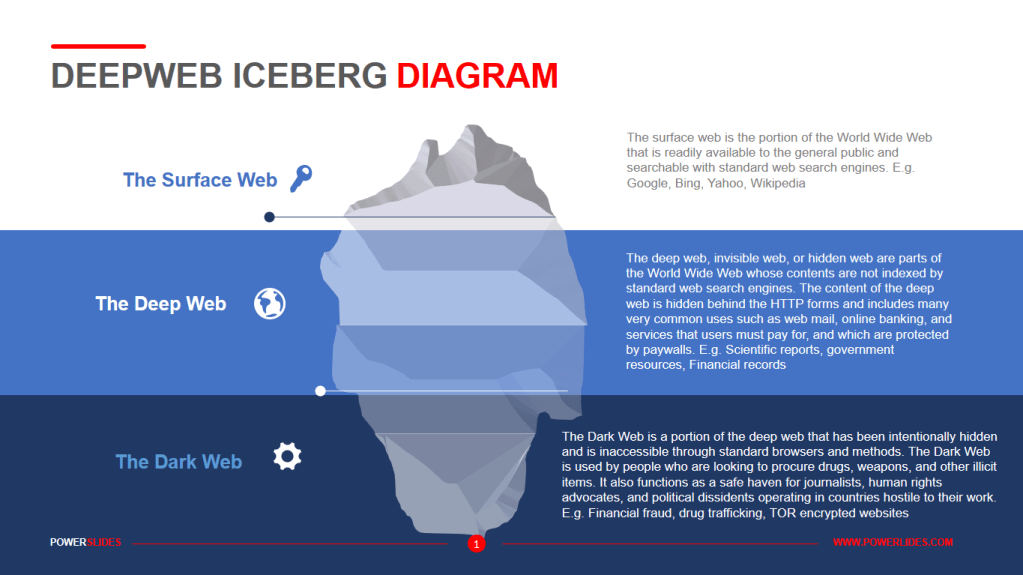
The bottom part of the iceberg is the dark web and while there are no exact figures, less than 10 percent of the content on the internet resides on the dark web. Typical content that is found there are drugs, illegal content, stolen information, and other hacker-esque content; however, it is also a place for citizens of repressive regimes to access denied content, journalists to communicate without regard to government interference, and in general a place for human rights advocates! Most of the culture surrounding the dark web is not just criminal in nature, but it is more about individual rights.
The next part is how do I access the dark web? Well, that entirely depends on what network you intend to access! There is more than one darknet. The well-known ones are Tor, I2P (The Invisible Internet Project), Freenet, Zeronet, IPFS (Interplanetary File System), and others. For this blog post, we’re going to stick with Tor, but if you’re interested about the other ones, let us know!
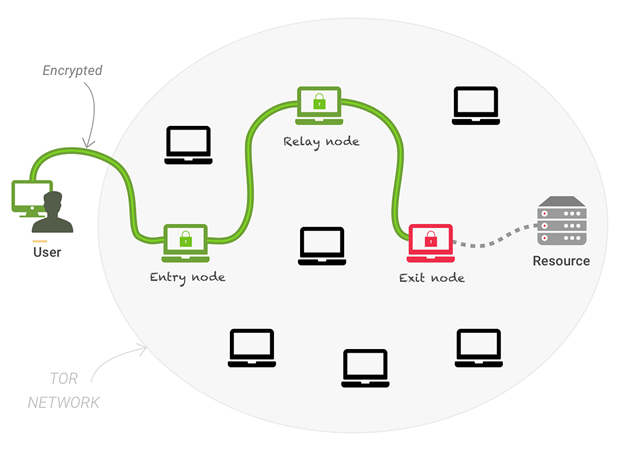
The most popular is Tor. Tor is now a standalone word, but it is still an acronym that can stand for The Onion Router. Tor routes a user’s connection through three other devices run by volunteers around the globe. This is called an Onion Circuit. Each of these nodes, also called relays, has its own encryption that must be decrypted in the circuit. Get it? Layers like an onion?!?! I always think of the movie Shrek when I make that reference. Once each circuit is decrypted, the information is routed from the user’s device to the website, and then back to the user’s computer. Below is a graphic demonstrating what I’ve just described. As a note, the exit relay is in red because information is sent from that device/server UNENCRYPTED!!! That’s why it’s important when using Tor to try not to link any activities back to your real world identity unless absolutely necessary. Additionally, make sure websites you visit are HTTPS! That “s” stands for secure and information is encrypted in transit, so even if the exit node begins gathering all logs, it would be next to impossible without the private key of the website to decrypt the traffic. Remember, security over convenience and safety first.
Credit – Medium.com
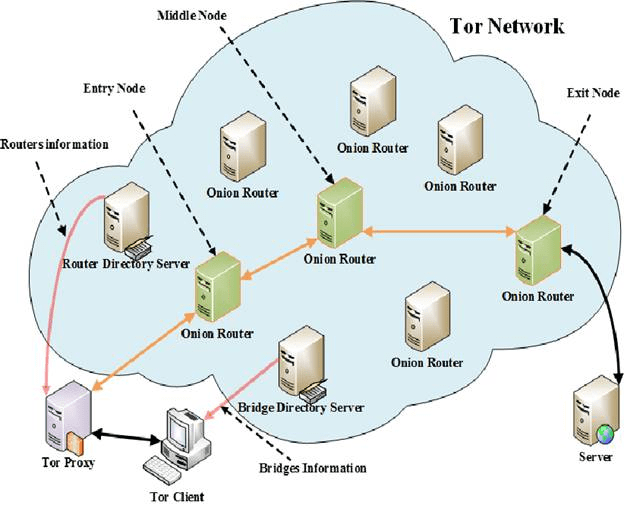
We actually haven not gotten to the dark web yet! This is just how Tor routes a connection from a computer to clear web site (not dark web). This changes a little when accessing a website hosted on Tor. Not only does the user get a circuit, but the website does too! This anonymizes both the user and the website making identification extremely difficult.
Credit – semanticscholar.org
This is all fine and dandy, but how do we ACTUALLY GET ON THE DARK WEB? Well, like I said before we need specialized software and encryption. Luckily, Tor has its own organization called The Tor Project that tries to simplify the entire process. They maintain a website at torproject.org where you can download the official Tor Browser that has all you need to begin navigating the Tor network. Navigate to their website, download the package for your operating system, install the browser, and you’re ready to go.

Credit – The Tor Project
DARK WEB DIRECTORIES
Now, where can we begin finding websites on the dark web, specifically Tor? They have their own top-level domain, which is .onion. These websites are not indexed by search engines and are not commonly found on popular website like Wikipedia or people sharing them via social media. Also, they are notorious for having fake mirrors that are not the actual website you’re intending to visit. Mirrors are duplicates of a website that can be legitimate
There are really only three ways to trust that an onion website is the correct one you’re wanting to visit. One, you host the website yourself; two, a trusted person provides the website to you; and three, which is the most popular, you visit a trusted darknet link directory! And yes, these can even be filled with untrustworthy websites as well, but over time you will begin to understand dark web tradecraft better to fully understand what websites exist just as a scam and others that actually have useful information. Below are some popular link directories that the dark web community trusts and others that I have found to be useful as well.
Daunt.link – That is the actual URL of the website and created by a dark web veteran. The admin of the most popular darknet forum, Dread, created daunt.link as a link directory for trusted dark websites. Hugbunter, admin of Dread, creates a relationship with dark web site creators, so that individuals have a legitimate place to go for trustworthy links to dark web sites.
Tor.taxi – Another URL for the actual site also created by a dark web veteran. This hosts many of the same websites as daunt.link and can be an alternative if daunt.link is down, which can occur!
Dark Web Daily – A link directory created by a former darknet vendor, Sam Bent AKA DoingFedTime, that has more links to darknet marketplaces, forums, and others of interest. His main page also
Dark Web Informer – Dark Web Informer is a well-known cybersecurity researcher on Twitter/X and LinkedIn that regularly posts information about data leaks, fraud, and other information of interest in dark web and hacker circles.
 The OSINT Output Hosted by Tim and Chris
Leave a comment