
By Jay Heisler, freelance Canadian Journalist
Bio:
Beth Martin-Board (LinkedIn profile) is the Chief Operating Officer of Satorus Group, a London-based open-source intelligence (OSINT) company building Sidney, an agentic AI platform designed to automate intelligence collection, analysis, and risk assessment for high-stakes decision-making. Beth leads internal strategy, platform domain alignment, operational execution, and delivery at Satorus. She architected the core infrastructure behind Sidney, including its open-source intelligence pipelines, dark-web ingestion capabilities, and risk governance frameworks. Beth previously led on-the-ground intelligence operations in Iraq, running OSINT programmes supporting humanitarian access, situational awareness, and threat monitoring across militia-controlled environments. She began her career as an intelligence analyst before founding her own intelligence consultancy, and later co-founded a startup that she helped scale to a £55m valuation within two years, before stepping back to focus on Satorus full-time. She has been called upon for her expertise on terrorism and Syria policy, with her work referenced in national media. Beth holds a BA in Politics from University College London (UCL).
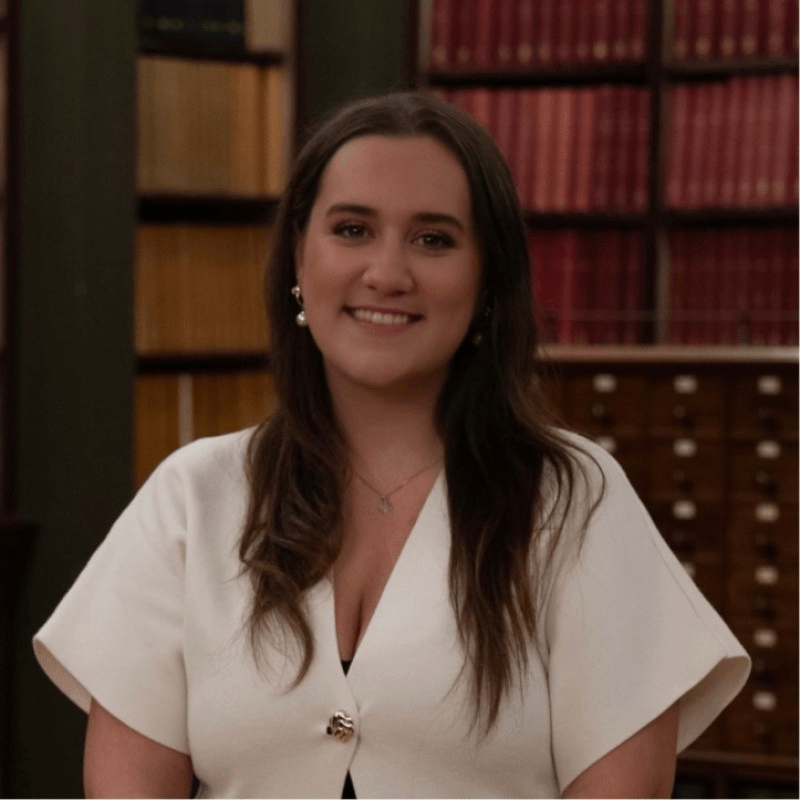
The OSINT Output blog was happy to meet with Beth Martin-Board for a Zoom call soon after her return from Iraq, where she had spent April-June in Baghdad, “leading OSINT on the ground.”
“We were doing OSINT and we were doing some human intelligence… It was to protect NGOs out there,” Martin-Board explained.
Martin-Board explained to us that she believes there is a common misconception among OSINT practitioners that everything can be done entirely remotely. She believes that this should always be complimented by in-person work, or using systems trained by those who have real field experience.
“Anybody can look at intel that you gain online but you can’t really interpret that unless you have the on-the-ground experience,” Martin-Board explained. “When I was on the ground we used OSINT to kind of enable the human intelligence we were doing.”
Martin-Board is the cofounder of Satorus Group, whose tagline is “Agentic AI for High-Stakes Intelligence.”
Before founding Satorus, Martin-Board was an analyst, working for a California-based private intelligence company. This work also took her to the Middle East. Before that she studied Political Science at UCL and specialized in Middle East studies, so she explains, “I always knew I was going to go into that realm.”
“Coming out of uni I was lucky to have landed what was essentially my dream job. I suppose the risks we were taking…. I just felt there was a better way and that’s why I essentially quit and went freelance for a bit before starting Satorus.”
Satorus was started by a chance meeting on LinkedIn.
“I was just doing geopolitical risk intelligence, whatever work I could find,” Martin-Board told us. “I connected with my friend Jack on LinkedIn, and he reached out to me because he had seen a post I had done about OSINT. And one thing led to another….. We began working on a few projects here and there, until it got to the point where we said let’s just team up, we both had the same ideas… Since then it’s developed into the company we have today.”
Martin-Board sees a bright future for Satorus in the current private intelligence ecosystem.
“At Satorus we’re really aiming to be a global company. We’re not trying to be quiet about it. We’re trying to disrupt the industry. I guess we’re a little bit different from other intelligence companies in that sense. We’re not quiet about what we’re trying to do to improve OSINT.”
The OSINT Output asked Martin-Board about how to network in OSINT if you visit the UK.
“I would definitely say, if you’re interested in OSINT, get involved with some of the community we’re got here,” Martin-Board replied. “There’s group chats galore, there’s events all the time, places like Chatham House run really cool free events and talks you can sign up to. I sat at a breakfast once next to a defense minister for a South American country, London has some of the best quality individuals within the OSINT space and people are generally quite helpful, if they have time to be.”
Finally, the OSINT Output asked Martin-Board about how she handles OPSEC.
“You need to understand good practice from the beginning and if you can’t do that, you really shouldn’t be doing it,” Martin-Board explained. “It goes as far as making sure if you are on sites that you should be observing, making sure you aren’t engaging.”
“I actually worked with someone who got in quite a bit of trouble, because they were monitoring a militia group,” she added. “Instead of just observing they created a fake profile and started engaging.”
If you would like to learn more about Satorus Group and their solutions, check out their website at https://satorusgroup.com/.
 The OSINT Output Hosted by Tim and Chris
Leave a comment