
By Tim Farmer, Co-Host of The OSINT Output (Introductions courtesy of Jay Heisler, Freelance Canadian Journalist)
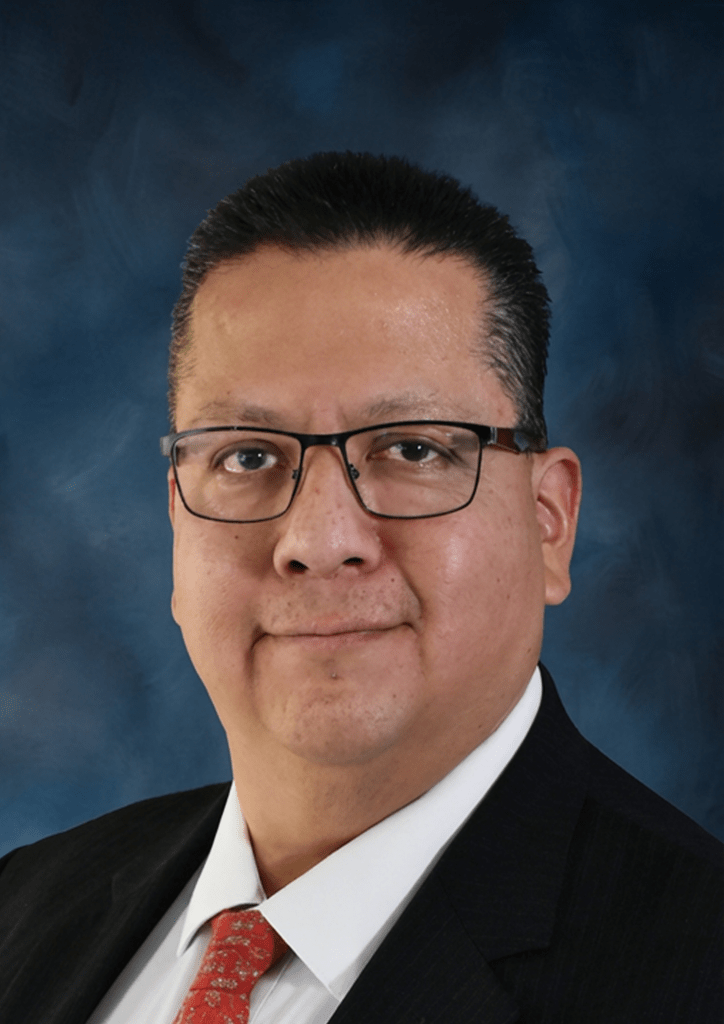
Ricardo Campos (LinkedIn Profile) is an intelligence and national security specialist with nearly three decades of experience in the Mexican public administration. He holds a Bachelor’s degree in Political Science and Public Administration from Universidad Iberoamericana and a Master of Public Administration from Cornell University. He has held senior positions of high responsibility at the National Intelligence Center and the Ministry of Foreign Affairs, reaching Director-General–level roles on the basis of merit. His professional trajectory is defined by risk and threat anticipation, regional and transnational strategic analysis, the coordination of multidisciplinary teams, and the integration of operational, strategic, and open-source intelligence, supported by advanced methodologies and artificial intelligence, and oriented toward high-level decision-making.
What types of training do OSINT analysts receive in Mexico?
OSINT analysts are preselected from the start depending on their academic and interests background. If they fit a profile and their exams point the same way they are enrolled in our OSINT branch. This branch is divided into at least three disciplines: OSINT, SOCMINT and HUMINT-V (v for virtual). Once in the branch, they attend several courses in our Intelligence School, as well as on line courses taught by ally services. Their common ground training is HUMINT activities. First, they learn all basic, intermediate and advance courses on that discipline. Once completed, they proceed to a second phase with more technical courses where they come into contact with apps and tools for OSINT et al disciplines already mentioned. The intent is to have investigators on-line, ready to do Strategic, operational and even tactical threat analysis and response. Thirdly, some, the most capable, are recruited into the HUMINT-V section where they will be offensively monitoring illegal activities and those that may represent a threat to Mexico’s National Security. Once they have been trained, it doesn’t stop there, we hold periodically CTF internal evaluations to keep them practicing, learning from their mistakes, and making their search and/or interaction capabilities better every time. Mexico also leads SOCMINT and HUMINT-V efforts in Latin [America], holding periodically meetings, encounters, sharing of information in different fronts. It has proven to work and to have located and detained specific targets and/or locate specific information. Brazil has proven to be a mighty partner in all of this.
Did you partner with any technology companies to better collect PAI?
Yes, for sure. Like any other service in the world, we base our needs on the fact that information is vital for decision making. We rely on Mexican tech companies that help us monitor 24-7-365 all available info in open space but also maintain close monitoring, and immediately report, on any preselected information. There is an ALERT SYSTEM in place that monitors all public information and there is another system where preselected information is stored and immediately shared with special recipients. These systems have proven very useful; it saves the Government hundreds of hours and man hours of looking, dividing, understanding, and delivering information.
What challenges did you have as head of intelligence? For example, block chain investigations for scams are difficult to investigate without the correct expertise, how did you overcome new technology challenges?
Main challenge, probably as any other service, financial resources. Budget was limited to what could be done. We had groups of four specialized in most important investigation types for us, but only that one group, no more. So, you can imagine the work load. Technology resources was also an important factor. We had sufficient equipment (hardware/software) but minimal and always hearing of new gadgets and toys we all would love to have to play with. Another important challenge was sometimes “encountering” other colleagues dwelling around common targets or issues of importance.
What are some cultural nuances in open-source investigations in Mexico that would be difficult for a non-native to grasp?
Definitely the lingo, the local dialect, both spoken and typed, needless to say the dress code and color of skin. Of course that can be resolved if you hire intermediate benefactors for the occasion. There is a whole world of a different Spanish language out there that even I sometimes had a hard time learning.
What is the level of digital literacy for the average Mexican citizens?
Access down here in Mexico is broad with high numbers in social media interaction. Still, very susceptible to believing, at first strike, misinformation. I think its pretty much the same as in the U.S., very similar.
What ethical challenges did you have while conducting open-source investigations?
Ethical challenges surface all the time and in this line of work there is always that comes up in front. Luckily, our internal manuals and procedures are clear about almost [any] incidents, most of them. There is a previously investigated response/justification for almost any mishap, so the ethical challenge is taken from the person and absorbed by internal rules and regulations, as well as evaluation committees.
 The OSINT Output Hosted by Tim and Chris
Leave a comment